Chicken Train: a crossing game where you set the risk
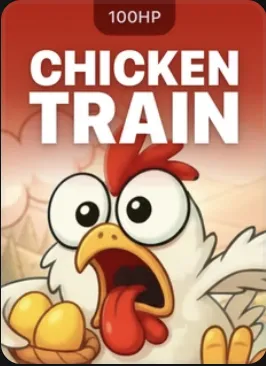
Chicken Train is a crash-type crossing game from 100HP Gaming with no reels at all. Every step the chicken survives lifts the multiplier on your stake; a failed step ends the round and the stake is gone. The only decision you make is when to stop, and the game lets you make it after any successful step. That makes it the most player-driven title among the featured games, and also the one where discipline matters more than luck in how a session feels.
At a glance
| Item | Value |
|---|---|
| Studio | 100HP Gaming |
| Type | Crash-type crossing game |
| Layout | No reels — a multiplier rises while you decide when to stop |
| RTP | 97% (check the rules panel for each mode) |
| Volatility | Chosen by the player through the difficulty mode |
| Maximum win | x55,833 multiplier cap |
| Features | Difficulty modes, cash out at any time, live decisions |
How a round works
You set a stake and a difficulty mode, then start the crossing. Each step forward is a separate risk: survive it and the multiplier moves up, fail it and the round is over. After each surviving step you can press cash out and collect the stake multiplied by the current figure. Nothing carries over between rounds, and no number of failed rounds makes the next crossing safer. The game rewards one thing only: deciding before the round where you will stop, and then actually stopping there.
Difficulty modes and volatility
In most slots volatility is fixed by the studio. Here it is a setting. Easier modes move the multiplier in small steps and end fewer rounds early, so a budget lasts longer and wins are modest. Harder modes jump the multiplier faster and end rounds more often, which turns the same budget into fewer, sharper outcomes. The x55,833 cap belongs to the far end of that scale: it is the ceiling of the game, reachable only through a long unbroken run, and a session plan built around it is a plan to lose the budget.
A sensible way to think about it: pick the mode first by how many rounds you want your budget to last, and only then pick a target multiplier. If one round costs one unit and you want at least a hundred rounds, a 100-unit budget on an easy mode with a modest target is a coherent plan; the same budget on the hardest mode chasing large multipliers is not.
Demo play: what to test first
If a demo version is available, spend it on the cash-out habit rather than on chasing a big run. Play fifty rounds on one mode with a fixed target, for example stopping at the same multiplier every time, and write down how many rounds reached it. Then repeat on a harder mode. You will see the difference in rhythm that the mode makes, and you will learn whether you can keep to a rule when the multiplier is still climbing. The results of a demo session do not predict the next real round; the habit is the useful part.
Bonus play and crash games
Crash-type and crossing games are often treated differently from slots in bonus terms. Some offers exclude them from wagering altogether, others count them at a reduced percentage, and some cap the multiplier that counts towards a bonus. Before playing Chicken Train with bonus money, look up three points in the bonus terms: whether the game contributes at all, the maximum stake per round, and any rule about cashing out at very low multipliers, which some terms treat as low-risk play. Our bonus terms guide covers the clauses that usually decide this.