Games at Hugo: eight featured titles and how to choose between them
This section is the core of the site: a guide to the featured games in the Hugo lobby and to the mechanics that decide how a session feels. The eight titles below cover very different maths, from a crossing game where you set the risk yourself to slots rated extreme volatility. Each has its own page explaining how it works, what its numbers mean and what to test before playing for money. Where the verified data has no figure, the guide says so and shows you how to read it in the game instead.



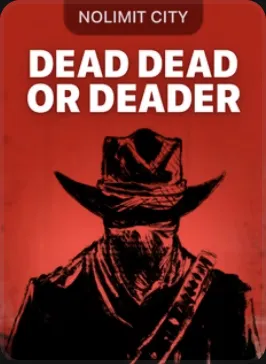




The eight games side by side
| Game | Type | Studio and RTP | Volatility |
|---|---|---|---|
| Book of Dead | Slot, 10 lines | Play'n GO, 96.21% | High |
| Wild Bandito | Slot, 1,024 ways, cascades | PG Soft, 96.73% | Medium |
| Dead, Dead or Deader | Slot, 243 ways | Nolimit City, 96.09% (configurable) | Extreme |
| Mental 2 | Slot, expanding rows | Nolimit City, 96.06% | Extreme |
| Chicken Train | Crash-type crossing game | 100HP Gaming, 97% | Set by difficulty mode |
| Aviator | Crash game | Info panel | Set by your cash-out target |
| Pinata Wins | Slot | Info panel | Info panel |
| Wild Bounty Showdown | Slot | Info panel | Info panel |
"Info panel" means the figure is not in the verified data this site uses. It is not missing from the game: open the game and read it there, in the version you are actually playing.
Choosing a game by volatility
Volatility describes the shape of returns, not their size over the long run. A medium-volatility slot such as Wild Bandito pays smaller amounts more often, so a modest budget gets a longer session. A high-volatility slot such as Book of Dead leans on its free spins round, so it can be quiet for a long time. The two Nolimit City titles, Dead, Dead or Deader and Mental 2, are rated extreme: most sessions end without a big moment, and the rare one carries the maths. The crash games sit outside this scale, because there the player sets the risk through a cash-out target or a difficulty mode. A useful habit is to choose the volatility first, from your budget and patience, and only then pick a title within that band.
Demo play before real money
Where the lobby offers demo versions, they load the real game with play credits. Use them to answer practical questions: how often does a spin pay anything, how long does it take to reach a feature, where is the auto cash-out in a crash game, what does a special modifier look like when it fires. Keep the test fixed, the same stake and the same number of spins, so you can compare games with each other. Do not read demo results as a forecast; each real spin is independent.
Reading RTP correctly
RTP is a long-run theoretical return over a very large number of spins. It does not describe one session, and a game with a higher RTP can still empty a budget faster than one with a lower figure if its volatility is higher. Two practical rules follow. First, read the RTP in the game's own info panel, because some titles are delivered in several configurations and the published figure may not be the one running. Second, compare RTP only between games of similar volatility; across very different games it tells you less than the paytable does.
How game types count for bonus wagering
Bonus terms usually give each game type a contribution percentage. Slots commonly count in full, while crash games, table games and live games are often counted at a reduced rate or excluded, and individual high-volatility slots sometimes appear on restricted lists. The terms of each offer decide, not the game, so check three things before playing with a bonus: whether your chosen title contributes, the maximum bet per spin or round while the bonus is active, and whether features such as gamble buttons or feature buys are allowed. The wagering guide shows how contribution changes the total play required.
What a casino game catalogue is made of
Most online casino lobbies are organised into the same groups. Slots are usually the largest group, from simple line games to ways and cascade engines. Crash games are a short-round format in which you decide when to take a rising multiplier. Table games bring roulette, blackjack and baccarat as software without a dealer, live casino streams the same games from a studio with a real dealer, and jackpot titles add a prize pool on top of the normal paytable. The featured games on this page cover the slot and crash groups, which are the ones where mechanics and volatility differ most from title to title.
Knowing which group a game belongs to answers practical questions before you open it: whether a demo is likely to exist, how fast rounds run, and how a bonus is likely to treat it.
Game providers behind the featured titles
Casino games are made by studios, not by the casino. The verified featured titles come from four of them: Play'n GO (Book of Dead), Nolimit City (Dead, Dead or Deader and Mental 2), PG Soft (Wild Bandito) and 100HP Gaming (Chicken Train). The studio builds the maths and publishes the RTP, which is why the same game behaves the same way wherever it runs, apart from the RTP configuration the operator chooses. For the other titles, the studio is named in the game's own info panel.
FAQ
Which of the featured games suits a small budget?
Where do I find the real RTP of a game?
Can I try the games for free?
Do all games count the same towards bonus wagering?
Slots, live casino, table games: Slots · Live casino · Table games. Each category page explains the mechanics typical for that group and how it tends to be treated in bonus terms.
Related guides
All guides in this section
- Aviator: the crash game where the exit is your only decision
- Book of Dead: the slot that lives on one expanding symbol
- Chicken Train: a crossing game where you set the risk
- Dead, Dead or Deader: read the RTP before the first spin
- Mental 2: a slot whose grid keeps changing shape
- Pinata Wins: how to size up a slot before the data is in
- Wild Bandito: one spin, several wins, a rising multiplier
- Wild Bounty Showdown: benchmark it before you back it